Evidence-based care at Vantage Point
Dry Needling in Bondi Junction
Fine needles to settle sensitive muscles, followed straight away by the exercise that makes it last.
- Every physiotherapist trained, including orofacial
- Electrical dry needling available
- No extra cost on your consultation
Where We Needle
Head to toe, wherever a sensitive muscle is holding you back.
How it works
What Dry Needling Actually Does
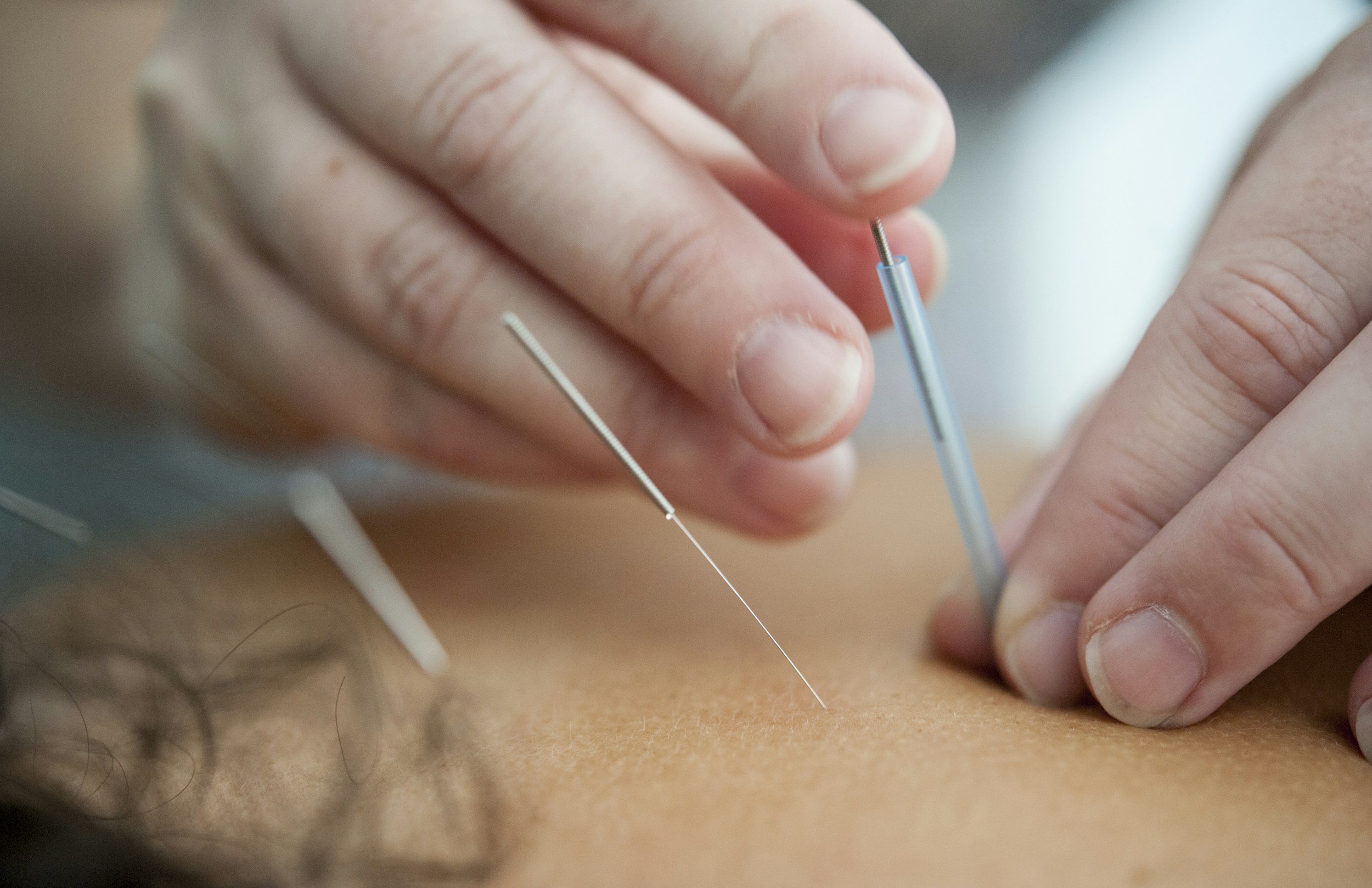
A fine needle is placed into a tender, sensitive point in a muscle. You may feel a brief twitch or a deep ache, then the area usually feels less sore and moves more freely for a period afterwards.
Research points to effects in the muscle and in how the nervous system processes pain, rather than the old idea of "releasing knots". That is why we use it to open a window of easier movement, and fill that window with exercise.
Electrical dry needling
A stronger option when it is needed
A small, adjustable current is passed between two needles, felt as a tapping or pulsing. We use it when a muscle needs a stronger or longer stimulus, and every physiotherapist on our team is trained in it.
You control the intensity. Tell us at any point and we turn it down or stop.
Your session
What Happens When We Needle
Every consultation is 45 minutes. Needling is one part of the session, never the whole of it, and it is always your choice.
- 1
Assessment and screening
We assess your problem first, then check your health history to make sure needling suits you.
- 2
Consent, twice
You complete a written consent form at your first appointment, and we ask for your verbal consent again before any needling, every session.
- 3
Needling
Sterile, single-use needles are placed for a few seconds up to several minutes, sometimes with electrical stimulation. Used needles go straight into a sharps container.
- 4
Part of your wider treatment
Needling is used within your session alongside the rest of your care, such as joint mobilisation, soft tissue work and exercise, never as a treatment on its own.
- 5
Afterwards
Keep moving, stay with your home program, and contact us if anything concerns you.
Safety
Does It Hurt, and Is It Safe?
What you will feel
- The needles are very fine, so most people barely feel them go in.
- At a sensitive point, a brief twitch or a deep ache that settles quickly.
- Muscle soreness for a day or two afterwards is common and normal.
- Strong needle anxiety? We have plenty of other options and never push needling.
What the safety research shows
7,629
treatments by physiotherapists studied
0
significant adverse events
7.6%
bruising, the most common side effect
Mild effects such as bruising, minor bleeding and soreness followed about one in five treatments (Brady et al., 2014).
How we keep it safe
- Sterile, single-use needles, disposed of straight after use
- Health screening before your first needling and whenever your health changes
- Careful depth and angle near the chest wall, where the rare serious risk is a punctured lung
- Written consent once, verbal consent every time
When we may not needle, or take extra care
- Blood thinners or a bleeding disorder
- Pregnancy, particularly the first trimester
- Skin infection or broken skin over the area, or a limb affected by lymphoedema
- Strong needle anxiety, where another treatment suits you better
The research
Does It Actually Work?
Musculoskeletal pain
Less pain than sham or no treatment, up to 12 weeks
Physiotherapist-delivered dry needling reduced pain from straight after treatment to 12 weeks. Long-term benefit is not yet shown (Gattie et al., 2017).
Neck pain
Short-term relief of pain and disability
A review of 28 trials found short-term benefit. By the medium term, results matched other physiotherapy (Navarro-Santana et al., 2020).
Jaw pain
Promising, still early
Pooled trials favoured dry needling for jaw pain intensity, though the evidence is of low quality and effects were small (Vier et al., 2019).
Dry needling eased pain more than other treatments, but function improved no more than with other physiotherapy (Gattie et al., 2017). Needling helps you move; exercise builds what lasts. That is how we use it.
Fees and funding
Consultations and Rebates
Dry needling is part of your 45-minute consultation, so you pay the standard fee whether or not we needle.
Book an AppointmentWays to claim
- Private health: rebates claimed on the spot with HICAPS
- Medicare: rebates with a GP referral
- Workers compensation: fees set by SIRA
- CTP: fees set by SIRA
Common Questions
Is dry needling the same as acupuncture?
They use similar needles but different reasoning. Dry needling targets muscles and tissues found on a physiotherapy assessment, while acupuncture is based on traditional Chinese medicine points and channels.
How soon will I notice a difference?
Many people notice less soreness and easier movement within a day or two. Research shows the clearest benefit in the short term, which is why we use that window for exercise.
Do I have to have dry needling?
No. It is always optional, we ask for your consent every time, and there are other effective ways to treat the same problem.
Is it covered by private health insurance?
Yes. Dry needling is part of a physiotherapy consultation, so your physiotherapy extras rebate applies, claimed on the spot with HICAPS.
What research is this page based on?
The studies referenced on this page are listed below.
- Brady S, McEvoy J, Dommerholt J, Doody C. Adverse events following trigger point dry needling: a prospective survey of chartered physiotherapists. J Man Manip Ther. 2014;22(3):134–140.
- Gattie E, Cleland JA, Snodgrass S. The effectiveness of trigger point dry needling for musculoskeletal conditions by physical therapists: a systematic review and meta-analysis. J Orthop Sports Phys Ther. 2017;47(3):133–149.
- Navarro-Santana MJ, Sanchez-Infante J, Fernández-de-las-Peñas C, Cleland JA, Martín-Casas P, Plaza-Manzano G. Effectiveness of dry needling for myofascial trigger points associated with neck pain symptoms: an updated systematic review and meta-analysis. J Clin Med. 2020;9(10):3300.
- Vier C, Almeida MB, Neves ML, Santos ARS, Bracht MA. The effectiveness of dry needling for patients with orofacial pain associated with temporomandibular dysfunction: a systematic review and meta-analysis. Braz J Phys Ther. 2019;23(1):3–11.
- Clinically reviewed by David Cohen and Zachary Ehrenfeld, APA Musculoskeletal Physiotherapists and Directors of Vantage Point Physiotherapy. Last reviewed October 2026.