Evidence-based care at Vantage Point
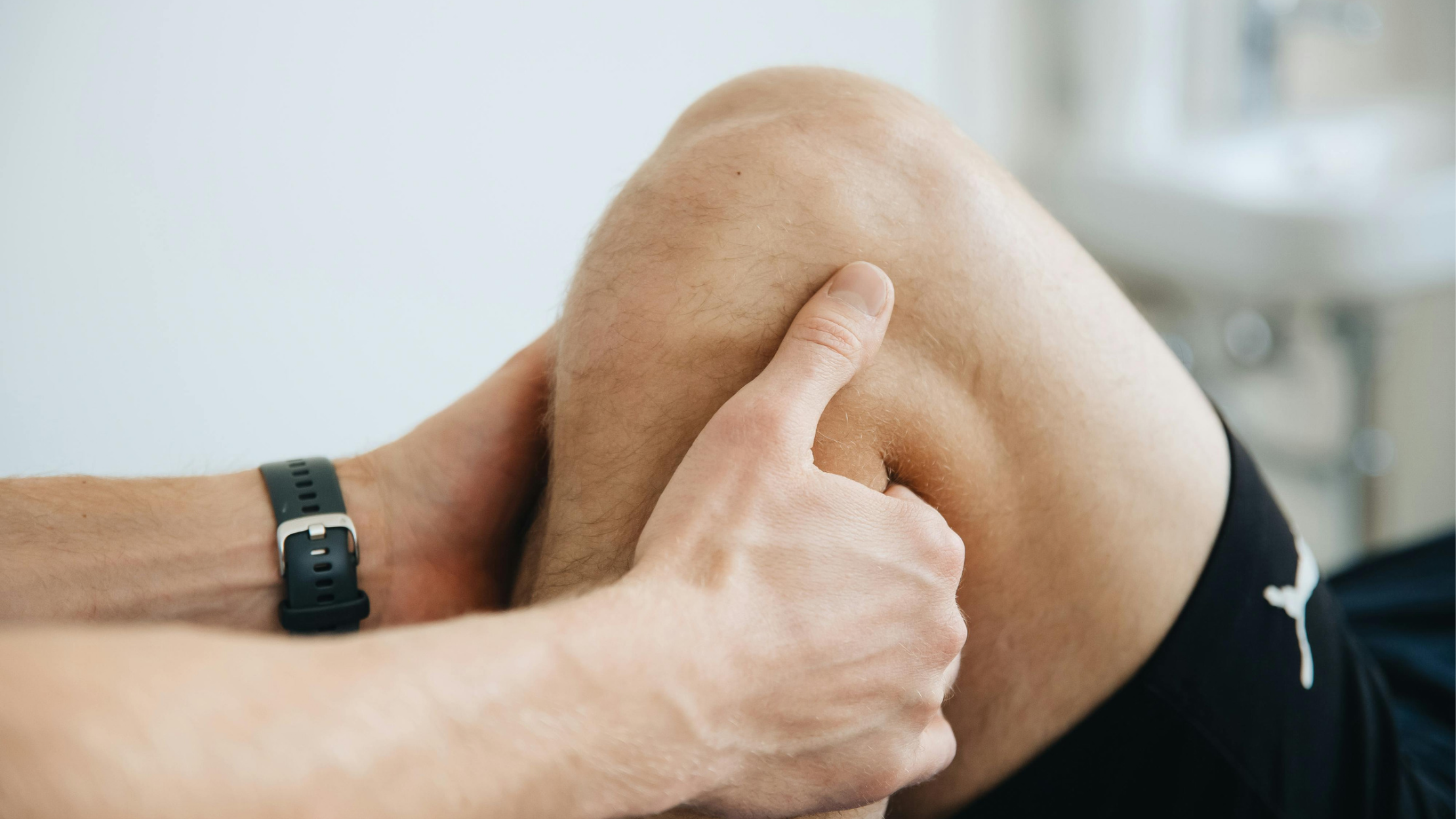
Knee Physiotherapy in Bondi Junction
Assessment and treatment for knee pain and knee injuries, from kneecap and tendon pain to ligament and meniscus injuries and arthritis, with a clear explanation of what is going on and a plan built around strength and load.
- APA Musculoskeletal Physiotherapists
- Quadriceps and hamstring strength testing with VALD
- Rehabilitation before and after knee surgery, including ACL
Symptom profiles
Which best describes your symptoms?
Knee pain presents in distinct ways, and how it started and where you feel it point to different structures and a different starting point for treatment. Select the one closest to yours.
Kneecap Pain (Patellofemoral Pain)
An ache around or behind the kneecap that comes on with stairs, squatting, running or sitting for long periods with the knee bent. It is one of the most common causes of knee pain in active teenagers and adults.
You might notice
- Pain going down stairs or hills
- Pain after sitting through a movie or a long drive
- Pain with squatting, kneeling or running
What is usually happening
The joint between the kneecap and the thigh bone has become sensitive to load, often after a jump in running, stairs or squatting, or when hip and thigh strength has not kept up. Scans are usually normal. Exercise therapy reduced pain and improved function in a Cochrane review of 31 trials (van der Heijden et al., 2015).
Common causes
Patellofemoral pain
Pain from the joint behind the kneecap, sensitive to load rather than damaged.
Fat pad irritation
Pain just below the kneecap, often worse standing with the knee locked straight.
Kneecap instability
A kneecap that slips or has dislocated, often after a twisting movement.
What we look at in your assessment
Knee, hip and foot movement, quadriceps and hip strength with VALD dynamometry, and how you squat, step and run.
How treatment usually starts
Changes to the activities that load the kneecap most, then progressive quadriceps and hip strengthening, measured as you go, and a graded return to running or sport.
Related services
Ligament and Meniscus Injuries
A knee injury from twisting, landing or a tackle, often with a pop, swelling within hours, or a feeling that the knee might give way. Meniscus problems can also come on gradually, with clicking or catching and no clear injury.
You might notice
- A pop at the time of injury, or swelling within hours
- The knee giving way when you turn or pivot
- Catching, clicking or pain along the joint line
What is usually happening
The ligaments hold the knee stable when you turn, land and change direction, and the meniscus is a C-shaped cushion between the thigh and shin bones. A torn ACL does not heal on its own, but many people regain good knee function with rehabilitation, and about 6 in 10 young adults who started with rehab did not need a reconstruction. For degenerative meniscal tears, keyhole surgery gave no better results than placebo surgery (Frobell et al., 2010; Sihvonen et al., 2013).
Common causes
ACL tear
The ligament in the centre of the knee, often torn when landing or pivoting, with swelling and giving way.
MCL and PCL injuries
The ligaments on the inside and back of the knee, usually from a blow or a fall onto a bent knee. Most heal well without surgery.
Traumatic meniscal tear
A tear from a twist or injury, more common in younger people and sometimes needing repair.
Degenerative meniscal tear
Wear-related tears, common after 40 and often found in people without pain, usually managed with exercise first.
What we look at in your assessment
Ligament stability and meniscal tests, swelling and range, and quadriceps and hamstring strength with VALD dynamometry. If your knee is locked, unstable or not improving, we arrange an MRI and a surgical opinion.
How treatment usually starts
Settling swelling and restoring full straightening early, then progressive strengthening and, if you are having surgery, prehab beforehand. Return to sport is based on milestones, not a date.
Related services
Knee Osteoarthritis
Knee pain and stiffness, often worse first thing in the morning, after sitting or with stairs and long walks, sometimes with swelling and a grinding feeling.
You might notice
- Stiffness on getting up that eases once you are moving
- Pain with stairs, kneeling or long walks
- Swelling after a busy day
What is usually happening
Cartilage thinning and changes in the joint are a common part of ageing, and they are not always painful. Exercise and education are the first-line treatment for knee osteoarthritis. A knee replacement can help when pain and function keep getting worse, and a structured program first helps many people manage without one (Skou et al., 2015).
Common causes
Knee osteoarthritis
Wear in the knee joint, with pain, stiffness and sometimes swelling.
Kneecap arthritis
Arthritis behind the kneecap, often painful on stairs and squatting.
What we look at in your assessment
Range of movement, quadriceps strength with VALD dynamometry, walking and stair tolerance, balance, and a review of your X-rays in the context of your symptoms.
How treatment usually starts
Progressive strengthening, a walking or activity plan you enjoy, and hands-on treatment to ease stiffness. Where longer-term conditioning would help, we work collaboratively with exercise physiologists.
Related services
Knee Pain in Children and Teenagers
Knee pain in a growing child or teenager, often during a growth spurt or a busy sporting season, and sometimes with no clear injury.
You might notice
- Pain at the bump below the kneecap, worse with running and kneeling
- Pain around the kneecap with stairs or sitting
- Pain that settles with rest and returns with sport
What is usually happening
During growth, the areas where tendons attach to bone are softer and more sensitive to load, especially when training increases during a growth spurt. Most adolescent knee pain settles with the right load management and strengthening, without needing to stop sport completely. Because hip problems in teenagers can be felt in the knee, we always check the hip too.
Common causes
Osgood-Schlatter disease
Pain and a tender bump below the knee, where the patellar tendon attaches to the shin bone.
Sinding-Larsen-Johansson syndrome
Pain at the lower tip of the kneecap, where the tendon attaches, in active children.
Kneecap pain and instability
Pain around the kneecap, or a kneecap that slips or has dislocated, common in teenagers.
Pain referred from the hip
Hip conditions in growing teenagers can be felt in the knee, so a teenager with a limp needs a prompt medical review.
What we look at in your assessment
Growth stage, training load across all sports, knee and hip examination, and strength with VALD dynamometry. A parent or guardian attends appointments with patients under 18.
How treatment usually starts
Load management across school sport and club training, progressive strengthening, and a plan the young person, parents and coach can follow, with a graded return to full training.
Related services
Knee Pain in Runners and Athletes
Knee pain that builds with running, jumping or a jump in training load, common in runners, basketball, volleyball and football players.
You might notice
- Pain just below the kneecap with jumping or landing
- Pain on the outside of the knee during longer runs
- Pain above the kneecap with squatting or lunging
What is usually happening
Tendons and the tissues around the knee adapt to load over weeks and months. When training increases faster than they can adapt, they become sensitive. Building tendon capacity gradually, rather than resting completely, is usually the way back.
Common causes
Patellar tendinopathy
Jumper's knee: pain in the tendon below the kneecap, worse with jumping and landing.
Iliotibial band pain
Pain on the outside of the knee, often in runners, worse with downhill running.
Quadriceps tendinopathy
Pain in the tendon just above the kneecap, often with squatting, lunging and lifting.
What we look at in your assessment
Your training load and running or jumping technique with video analysis, tendon loading tests, and quadriceps, hip and calf strength with VALD dynamometry.
How treatment usually starts
Load management and a modified training plan agreed with your coach, progressive tendon and strength loading, and a graded return to full training based on milestones.
Related services
Recovery After Knee Surgery
Rehabilitation before and after knee surgery, from ACL reconstruction to knee replacement, starting when your surgeon advises and following their protocol.
You might notice
- Swelling and stiffness after your operation
- Difficulty fully straightening the knee
- Wanting to get back to walking, work or sport
What is usually happening
Restoring full straightening and switching the quadriceps back on early are two of the most important goals after knee surgery. Strength comes next, staged to protect the repair. After ACL reconstruction, waiting until at least 9 months and restoring quadriceps strength both lowered the reinjury rate (Grindem et al., 2016).
Common surgeries
ACL reconstruction
A new ligament graft, followed by a structured program with a return to sport based on testing.
Knee replacement
Total or partial replacement of a worn joint, with early movement and a staged return to activity.
Meniscus repair or trim
Repair or removal of a torn meniscus, with protection that depends on the procedure.
Kneecap stabilisation
Surgery such as MPFL reconstruction after recurrent kneecap dislocation.
What we look at in your assessment
Your surgeon's protocol, swelling and range of movement, quadriceps activation, and strength testing with VALD dynamometry once it is safe to test.
How treatment usually starts
Before surgery, prehab builds strength and full range. Afterwards, settling swelling and restoring straightening come first, then staged strengthening within your surgeon's limits, progressed by measured milestones. We communicate with your surgeon throughout.
Related services
Pain that starts in your hip or groin and spreads to the knee? See hip physiotherapy.
Understanding knee surgery
Surgery Is Not Always the First Step
For several common knee problems, large trials have compared surgery with physiotherapy-led care, and in one case with placebo surgery.
The results show why we usually start with a structured plan, and why surgery remains the right choice for some people. When it is, we work with your surgeon before and after the operation.
Degenerative meniscal tear: improvement at 12 months
Knee score improvement (Lysholm, 0 to 100)
146 people aged 35 to 65 with a degenerative meniscal tear. Both groups improved by a similar amount, and there was no meaningful difference at any point over the year (Sihvonen et al., 2013).
What other trials have found
ACL tear: rehab first or early reconstruction?
In 121 young, active adults with a new ACL tear, knee function at 2 years was the same after early reconstruction as after rehabilitation with the option of later surgery, and about 6 in 10 of the rehabilitation group did not need a reconstruction (Frobell et al., 2010).
Knee arthritis: replacement or a structured program?
In 100 people eligible for a knee replacement, surgery gave greater improvement than a 12-week nonsurgical program, but with more serious complications (24 compared with 6). Three in four of the nonsurgical group had not needed a replacement after a year (Skou et al., 2015).
Your treatment
Five Steps, Each With a Clear Goal
Every consultation is 45 minutes. Your plan is built around what matters to you, whether that is the stairs at home, a morning run or getting back to the field.
- 1
Assess
A detailed history and examination of your knee, hip and foot, including screening for anything that needs a medical opinion or imaging.
Goal: A clear diagnosis
- 2
Explain
What is causing your pain, what to expect, and which activities are safe to keep doing.
Goal: Confidence to keep moving
- 3
Settle
Hands-on treatment, dry needling where it helps, and changes to how you load the knee to calm swelling and pain.
Goal: Pain and swelling under control
- 4
Strengthen
Progressive exercise for your quadriceps, hamstrings, hips and calves, with VALD dynamometry to compare sides and track change.
Goal: Strength targets met
- 5
Stay well
A return to running, sport or full activity based on milestones, and a plan to keep your knee strong.
Goal: Back to what matters to you
Cortisone injections
Where Injections Fit
Cortisone injections are often offered for knee arthritis. They can ease a flare-up for a short time, but repeated injections are a different matter.
We do not give injections ourselves, but we often see people who are considering one, and we work with the GP, sports physician or specialist who provides it.
Repeated injections for knee arthritis
No better for pain, more cartilage loss
In 140 people with knee arthritis, cortisone injections every 3 months for 2 years gave no more pain relief than saline injections, and led to greater cartilage loss (McAlindon et al., 2017).
How we work with injections
Buying time to do the rehab
If you do have an injection, we treat any relief as a window to build strength and confidence in the knee, so you are better prepared when its effect wears off.
The research
What the Research Tells Us
Kneecap pain
Exercise reduced pain and improved function
A Cochrane review of 31 trials found exercise therapy reduced pain and improved function in the short term for people with patellofemoral (kneecap) pain (van der Heijden et al., 2015).
Meniscal tears
Surgery no better than placebo surgery
For degenerative meniscal tears, keyhole surgery to trim the meniscus gave no better results at 12 months than placebo surgery (Sihvonen et al., 2013).
ACL tears
Rehab first is a reasonable option
Knee function at 2 years was the same with early reconstruction or rehabilitation with optional later surgery, and most of the rehabilitation group avoided surgery (Frobell et al., 2010).
Return to sport
Time and strength both lowered reinjury
After ACL reconstruction, each month that return to sport was delayed, up to 9 months, reduced the reinjury rate by 51%, and more even quadriceps strength also reduced it (Grindem et al., 2016).
Knee arthritis
Replacement helps, with trade-offs
Knee replacement gave greater improvement than a 12-week nonsurgical program, with more serious complications, and three in four people in the nonsurgical group did not need a replacement within a year (Skou et al., 2015).
Many knee problems settle with the right load at the right time, and when surgery is needed, the strength you build beforehand and afterwards matters. That is why we measure your strength and build your plan around it.
Fees and funding
Consultations and Rebates
Every consultation is 45 minutes. The number of consultations you need depends on your knee and your goals, so we discuss your plan with you at your first visit.
Book an AppointmentWays to claim
- Private health: rebates claimed on the spot with HICAPS
- Medicare: rebates with a GP referral
- Workers compensation: fees set by SIRA, with approvals coordinated with your case manager
- CTP: fees set by SIRA
Common Questions
Do I need an MRI for my knee?
Not always. Many knee problems can be diagnosed clinically. After a significant twisting injury, or if your knee is locking or not improving, we arrange imaging through your GP or a sports physician when it would change your plan.
Do I need surgery for a meniscal tear?
It depends on the tear. For degenerative tears, keyhole surgery gave no better results than placebo surgery (Sihvonen et al., 2013), so most people start with physiotherapy. A knee that is locked and will not straighten, or a tear from a significant injury in a younger person, may need a surgical opinion, and we refer promptly.
Do I need an ACL reconstruction?
Not everyone does. In a trial of young, active adults, rehabilitation with the option of later surgery gave the same knee function at 2 years as early reconstruction (Frobell et al., 2010). The decision depends on your sport, your goals and how your knee responds, and we talk it through with you and your surgeon.
Should I get a cortisone injection for knee arthritis?
It is a decision for you and your doctor. Repeated injections every 3 months gave no more pain relief than saline over 2 years and led to more cartilage loss (McAlindon et al., 2017). We are happy to talk it through with you and your GP or specialist.
When should I see a doctor urgently?
Seek urgent medical care if you cannot put weight on your leg after an injury, if your knee is locked and will not straighten, or if your knee is hot, red and swollen with a fever. A knee that swells within hours of a twisting injury should be assessed promptly.
How many sessions will I need?
It depends on your knee, how long you have had symptoms and your goals. We give you an estimate at your first visit and review it as you meet each step's goal.
Can I claim my physio through private health?
Yes. Rebates are claimed on the spot with HICAPS. Medicare rebates are available with a GP referral, and workers compensation and CTP claims are accepted once approved.
What research is this page based on?
The studies referenced on this page are listed below.
- Frobell RB, Roos EM, Roos HP, Ranstam J, Lohmander LS. A randomized trial of treatment for acute anterior cruciate ligament tears. N Engl J Med. 2010;363(4):331–342.
- Grindem H, Snyder-Mackler L, Moksnes H, Engebretsen L, Risberg MA. Simple decision rules can reduce reinjury risk by 84% after ACL reconstruction: the Delaware-Oslo ACL cohort study. Br J Sports Med. 2016;50(13):804–808.
- McAlindon TE, LaValley MP, Harvey WF, Price LL, Driban JB, Zhang M, Ward RJ. Effect of intra-articular triamcinolone vs saline on knee cartilage volume and pain in patients with knee osteoarthritis: a randomized clinical trial. JAMA. 2017;317(19):1967–1975.
- Sihvonen R, Paavola M, Malmivaara A, Itälä A, Joukainen A, Nurmi H, Kalske J, Järvinen TLN. Arthroscopic partial meniscectomy versus sham surgery for a degenerative meniscal tear. N Engl J Med. 2013;369(26):2515–2524.
- Skou ST, Roos EM, Laursen MB, Rathleff MS, Arendt-Nielsen L, Simonsen O, Rasmussen S. A randomized, controlled trial of total knee replacement. N Engl J Med. 2015;373(17):1597–1606.
- van der Heijden RA, Lankhorst NE, van Linschoten R, Bierma-Zeinstra SMA, van Middelkoop M. Exercise for treating patellofemoral pain syndrome. Cochrane Database Syst Rev. 2015;1:CD010387.
- Clinically reviewed by David Cohen and Zachary Ehrenfeld, APA Musculoskeletal Physiotherapists and Directors of Vantage Point Physiotherapy. Last reviewed October 2026.